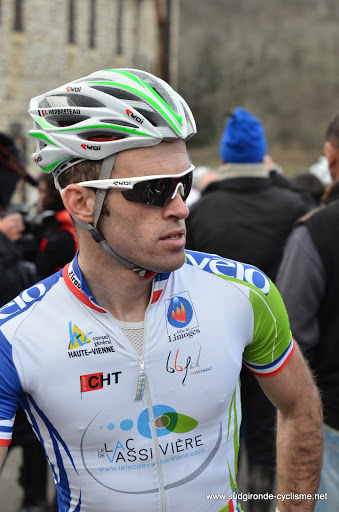
The Shocking Downfall of Loïc Herbreteau: From Cycling Fame to Felony
The world of professional sports often captivates with tales of triumph, dedication, and the relentless pursuit of excellence. Yet, sometimes, these narratives take a dark and unexpected turn, revealing the fragility of human ambition and the devastating consequences of personal struggles. Such is the harrowing story of Loïc Herbreteau, a former professional cyclist whose life trajectory tragically spiraled from the highs of athletic achievement and notoriety to the ignominy of a murder conviction. The verdict, delivered by the Cour d’Assises de la Loire, saw Herbreteau, once a celebrated figure, sentenced to 18 years in prison for the voluntary homicide of an elderly man he was employed to assist. This case stands as a stark reminder of how an "ancien pro meurtre" – a former professional implicated in murder – can shock public consciousness and underscore the complex challenges faced by athletes post-retirement, particularly when compounded by personal demons.
A Career Derailed: Doping, Retirement, and Subsequent Struggles
Loïc Herbreteau's journey into professional cycling saw him achieve notable success. A highlight of his career was his victory in the prestigious Tour du Loir-et-Cher in 2006, a win that cemented his status as a promising talent in the peloton. For years, he dedicated his life to the demanding sport, enduring rigorous training regimes and competing at high levels.
However, his professional career, like many during that era, was not without controversy. In 2011, Herbreteau's career came to an abrupt end after he tested positive for EPO (Erythropoietin), a performance-enhancing drug. The doping scandal cast a shadow over his achievements and forced his retirement from the sport he had dedicated his life to. The transition from the structured, high-stakes world of professional athletics to civilian life can be incredibly challenging for many athletes. The loss of identity, the sudden absence of a daily routine, and often, financial instability, can create fertile ground for mental health issues, depression, and addiction. While the specifics of Herbreteau's post-retirement struggles are not fully detailed, the defense later highlighted his "problèmes d'addiction" and "état dépressif," suggesting a difficult period following his exit from professional cycling. This narrative often resonates with the broader discussion around the support systems available, or often lacking, for athletes once their competitive days are over.
The Crime: A Tragic Betrayal of Trust
Years after his cycling career ended, Loïc Herbreteau found himself in a role far removed from the glory of the cycling track: a home helper for an octogenarian in Montbrison, Loire. It was in this capacity that the tragic events of March 24, 2021, unfolded. Herbreteau was accused of brutally assaulting and killing his vulnerable 80-year-old client. The prosecution detailed how Herbreteau allegedly strangled and suffocated the elderly man before stealing his bank card and subsequently withdrawing money.
The victim's body, discovered lifeless in his apartment, bore evident signs of a struggle, including scratches around the neck, which painted a grim picture of the violent encounter. The investigation quickly honed in on Herbreteau. Surveillance footage played a crucial role, identifying the former cyclist in connection with the incident, leading to his arrest. This disturbing turn of events, where a former professional athlete commits such a heinous act, highlights a profound fall from grace. The breach of trust, given his role as a caregiver to a vulnerable individual, further deepened the gravity of the crime. For more details on the conviction, you can refer to articles like
Loïc Herbreteau's Conviction: Ex-Pro Cyclist Jailed for Elderly Victim Murder.
Justice Served: The Trial and 18-Year Conviction
During police custody, Loïc Herbreteau initially confessed to killing the victim. However, he later retracted his confession, asserting that the octogenarian was already deceased when he entered the home with the intention of stealing his bank card. Throughout the subsequent trial, he vehemently denied the charges, maintaining this revised defense.
Despite his denials, the evidence presented against him was compelling. Me André Buffard, the lawyer for the civil parties, confirmed that the verdict from the Cour d’Assises de la Loire was consistent with the prosecution's request. Herbreteau, 47, was found guilty of "homicide volontaire sur personne vulnérable" (voluntary homicide of a vulnerable person) and sentenced to 18 years of criminal detention. Me Buffard commented on the severity of the sentence, stating, "It's a very heavy sentence, a real sanction, the message is clear." He further elaborated that Herbreteau's persistent denial throughout the trial led to "a verdict of total guilt and an extremely strong sentence." The defense, represented by Me Pierre-Henri Mollard, attempted to mitigate the charges by highlighting Herbreteau's "problems with addiction" and "depressive state," but these arguments failed to sway the court. At the conclusion of the deliberations, the defense had not yet indicated whether an appeal would be filed. The court's decision reflects a strong stance against violence, especially when directed at the most vulnerable members of society.
Beyond the Verdict: Understanding the 'Ancien Pro Meurtre' Phenomenon
The case of Loïc Herbreteau is more than just an individual criminal conviction; it serves as a stark example of the potential for profound personal crises and criminal acts to emerge from the shadows of a public career. The phrase "ancien pro meurtre" resonates with a broader societal fascination and concern when individuals who once held public esteem, particularly in demanding fields like professional sports, fall into such deep criminality.
Several factors often contribute to such a dramatic downfall:
- Post-Career Transition Challenges: Many athletes struggle immensely after retirement. The sudden loss of purpose, identity, routine, and often, significant income, can lead to depression, anxiety, and a feeling of aimlessness.
- Financial Difficulties: Despite common perceptions, not all professional athletes secure their financial futures. Poor management, lavish spending, or a lack of stable income post-retirement can lead to desperate measures.
- Addiction and Mental Health: The intense pressure of professional sports can mask underlying mental health issues or contribute to the development of addictions. Without the structured environment of competition, these issues can escalate. Herbreteau's defense, though unsuccessful, pointed to his struggles with addiction and depression, which are common challenges faced by individuals navigating severe life changes.
- Erosion of Support Systems: While in their prime, athletes are surrounded by teams, coaches, and agents. This support often diminishes significantly upon retirement, leaving individuals isolated and vulnerable.
The Herbreteau case, like other instances where former prominent figures face serious legal consequences, compels us to consider the complex interplay of personal choices, societal pressures, and systemic failures. It also reminds us that justice, though sometimes delayed, eventually pursues those accused of grave crimes, regardless of their past fame or profession. Such events often spark discussions about rehabilitation, accountability, and the long-term well-being of athletes beyond their competitive years. While vastly different in context and circumstance, cases involving former public figures facing justice, such as those detailed in articles like
Apartheid-Era Murders: South African Ex-Police Officers Face Justice, underscore a universal principle: accountability for serious crimes transcends past status or the passage of time.
In conclusion, Loïc Herbreteau's journey from a celebrated cyclist to a convicted murderer is a profound tragedy. His story is a poignant reminder of the intricate factors that can lead an individual down a path of self-destruction and harm to others, even after achieving success in a high-profile career. The 18-year sentence sends a clear message about the unwavering pursuit of justice for heinous crimes, particularly those against the vulnerable.